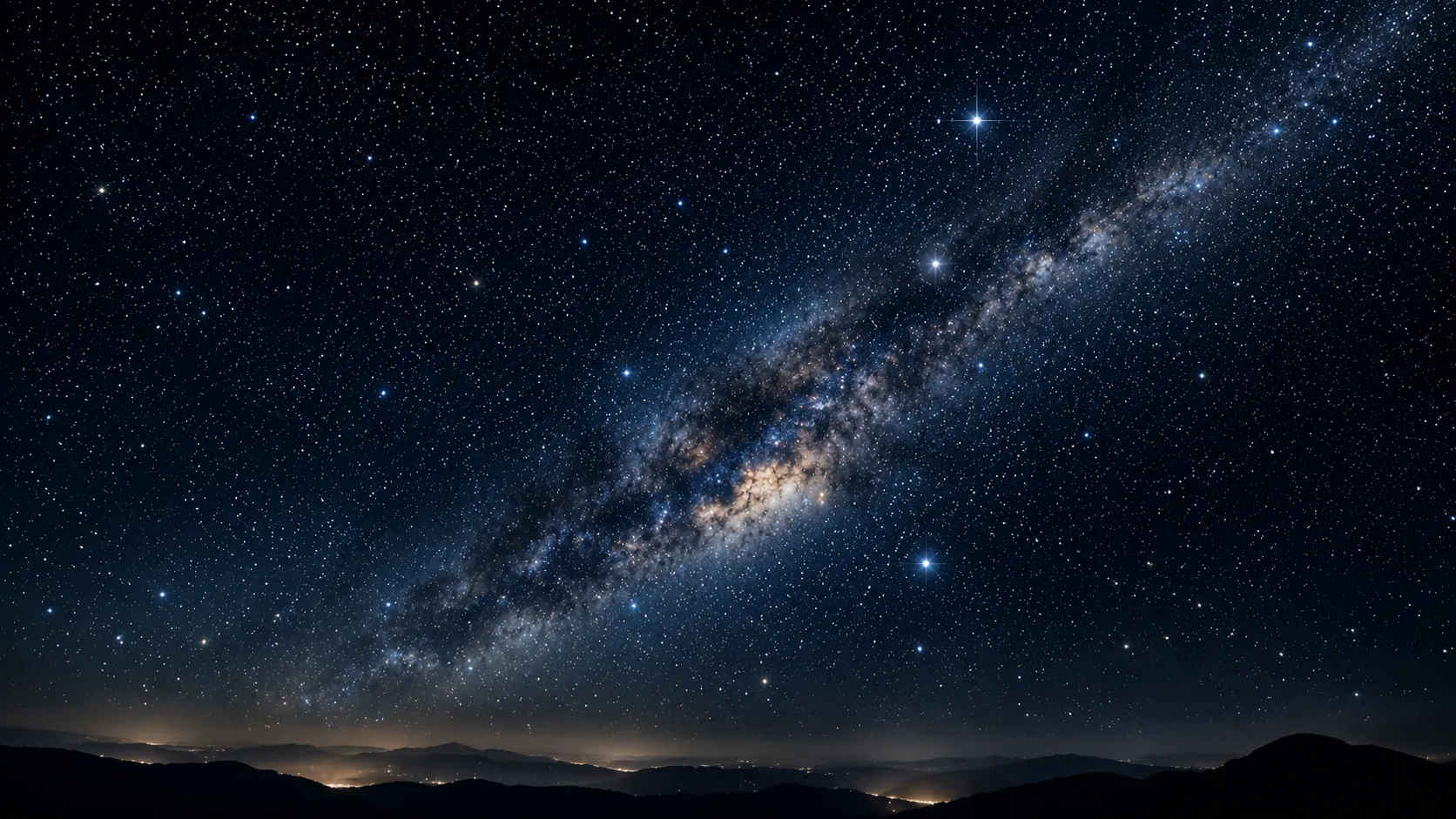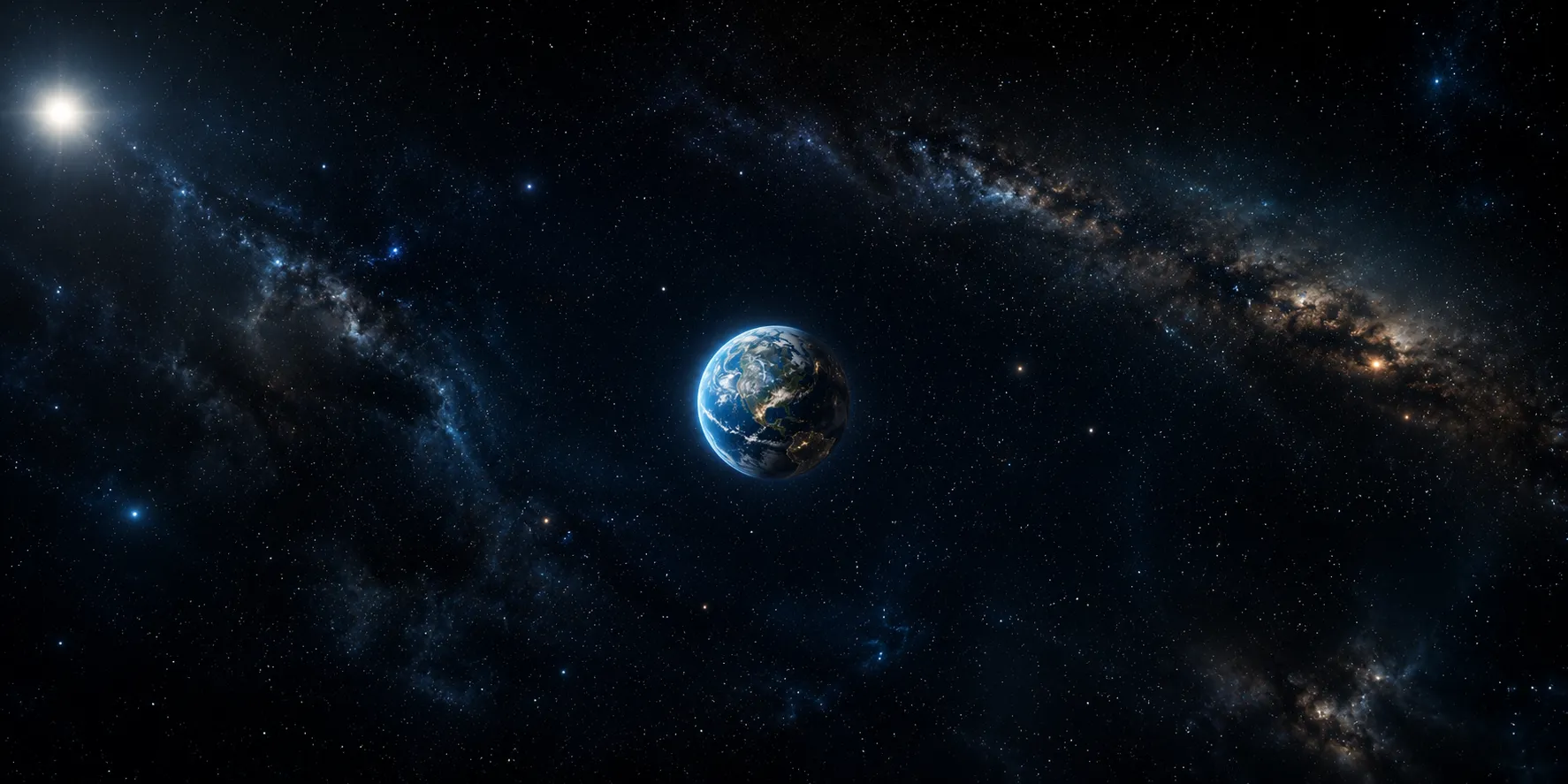
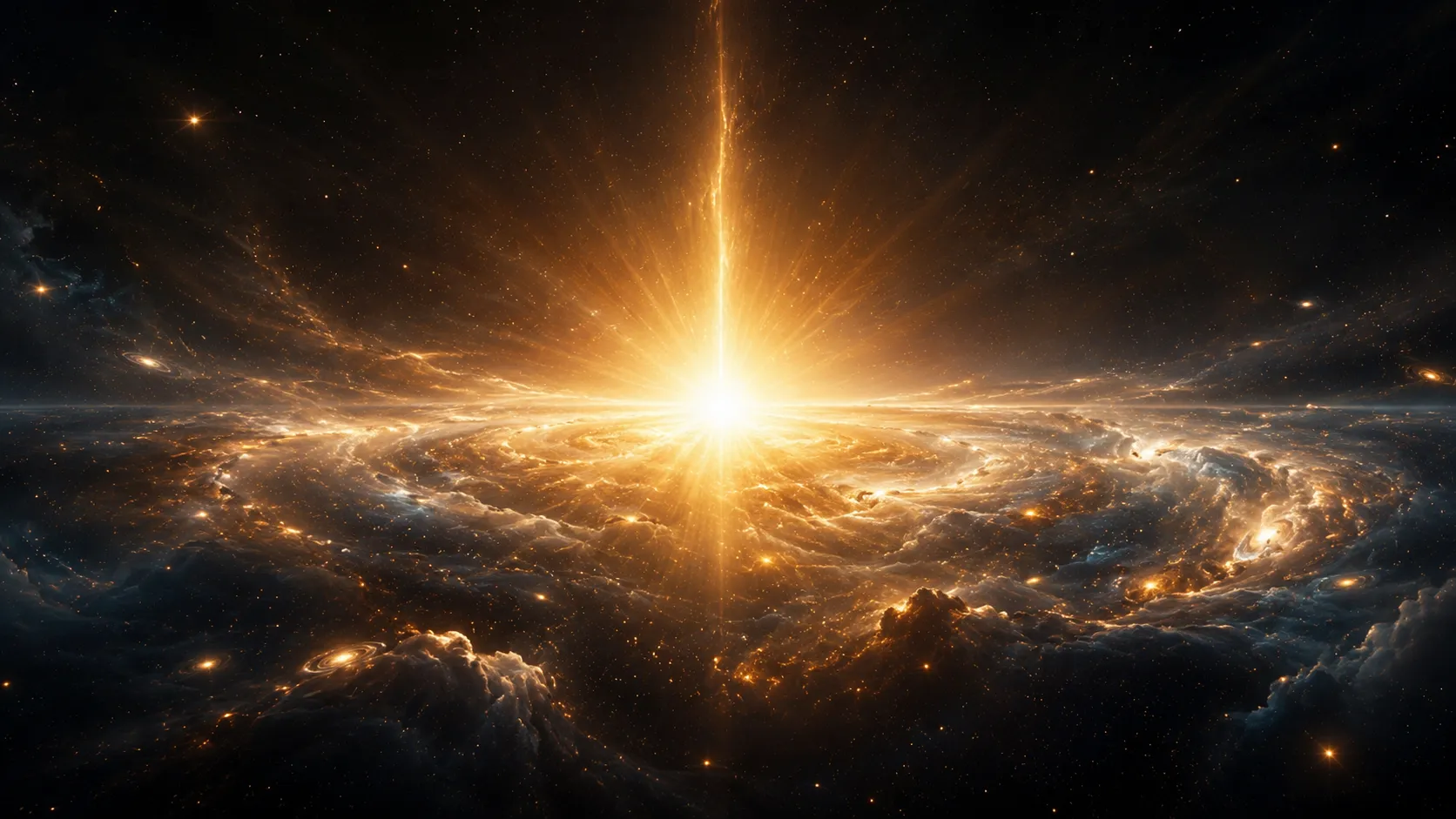
Genesis 1:1 and Modern Science tell us that the Universe had a beginning.
## 📖 Bible Verse (KJV)
In the beginning, God created heaven and earth.
— Genesis 1:1 (KJV)
## 📅 Approximate Year Written
Around 1445–1400 BC
Traditionally this book is believed to have been written by Moses, and to have been composed during the period of the Israelites' exodus from Egypt to the Promised Land.
## 🏛️ Historical Background
The Bible says, "In the beginning, God created the heavens and the earth.The Bible begins with a simple, but profound, statement: the universe had a beginning because God created it. The story of creation in Genesis is different from many ancient creation myths which tell of the universe coming from warfare between the gods or from a timeless material.Genesis starts with a single, controlling Creator who brings creation into being as a result of His purpose.
The Bible does not give us any details about the actual mechanism of creation. On the contrary, it points to God as the source of all things.
## 🌍 What People Believed Then
Several ancient civilizations had myths explaining how the universe was created and they wrote that this process had already happened in the past or that the universe had always existed.
For example:
The world was created as a result of the war among gods in some Mesopotamian creation story.
In ancient Egypt, there were numerous creation myths about the different gods.
Later, some Greek philosophers proposed that there is an infinite number of "eternal" particles of matter, meaning that it has no beginnings.
The worldview of Genesis is one of a definite beginning, with a single Creator.
## 🔬 Modern Scientific Understanding
The modern cosmology, ending that the seen universe is a result of a beginning about 13.8 billion years ago.
The best scientific theory to date, known as the Big Bang model, is a description of the early expansion of the universe from a very hot, dense state. This is supported by evidence such as:
The growth of universe.
CMBR – cosmic microwave background radiation.
The abundance of light elements (hydrogen and helium) observed.
Note that the Big Bang theory is about the universe's development from its earliest known form, rather than why the universe exists, or what, if anything, caused the beginning.
---
## 🚀 Real-World Example
Observatories around the world, as well as the National Aeronautics and Space Administration and the European Space Agency, are still observing distant galaxies and cosmic background radiation to learn more about the early universe.
The James Webb Space Telescope is a space telescope that will observe galaxies that were created just a few hundred million years after the birth of the universe, thereby contributing to its understanding of cosmic history.
## 💡 Easy Explanation
Suppose you see a balloon being blown up.
As the balloon expands it takes longer to get points on its surface apart.
The illustration that the scientists use to explain the universe's expansion is similar.The illustration that scientists use to explain the expansion of the universe is similar. In a universe that is currently expanding, it seems that it was once smaller and denser in the past.
Genesis just starts out with the word "was".
## 🤯 Did You Know?
The estimate of the age of the observable universe is about 13.8 billion years.
Light from the farthest galaxies has come to Earth after traversing billions of years.
The cosmic microwave background is referred to as the oldest light that scientists can see.
The beginning of the story "In the beginning" is one of the most well known first phrases in world literature.
## 🔍 Scientific Consensus
The consensus of scientists is that the observable universe began as a universe in its current form some 13.8 billion years ago.
But science says nothing about the creation by God of the universe, nor about what caused the universe to start. Those questions are from the realm of philosophy and theology.
Similarly, Genesis 1 has various interpretations when it comes to modern cosmology. They are either looking at the harmony of Genesis with the scientific evidence for a beginning or warning against inserting scientific knowledge of the day into an ancient text.
## 🙏 Spiritual Reflection
Believers are reminded of the fact that creation is not random or meaningless from Genesis 1:1. The Bible starts out by stating that everything is from God.
Many are led to think of the greatness, order and mystery of the universe when they observe the stars through a telescope, or read the first pages of Scripture.
## 📌 Key Takeaway
In the first verse of the Bible (Genesis 1:1), we read that the universe began and that it was created by God. Additionally, modern science also agrees that the observable universe began in the past, but does not account for the cause of the universe. These views together provide good grounds for discussion on the question of the origin of all that is.
## 📚 References
### Scripture
The KJV (King James Version) Holy Bible is used.
* Genesis 1:1
### Scientific Sources
1. NASA – Universe Overview
2. ESA – Cosmology Resources
Big Bang Model in 3. Encyclopaedia Britannica.
The 4th one is NASA Wilkinson Microwave Anisotropy Probe (WMAP).
5. Materials for the James Webb Space Telescope Mission
### Historical Sources
1. New Bible Dictionary
The Illustrated Bible Backgrounds Commentary is a second edition of 2.No, Zondervan Illustrated Bible Backgrounds Commentary is a second edition of 2.
4. The Book of Job: The Story of a Great Trial – Ancient Near Eastern creation myths
### Classification
Biblical Statement: Genesis 1:1
Observable universe had a beginning (Established Science).
Theologians and biblical scholars analyze the passage of Genesis 1:1 with various perspectives in regard to its interpretation as relating to modern cosmology.